INSiGHT Scans Explained: What They Measure and Why It Matters
Dr. Colton O'Brien
Trinity Life Chiropractic
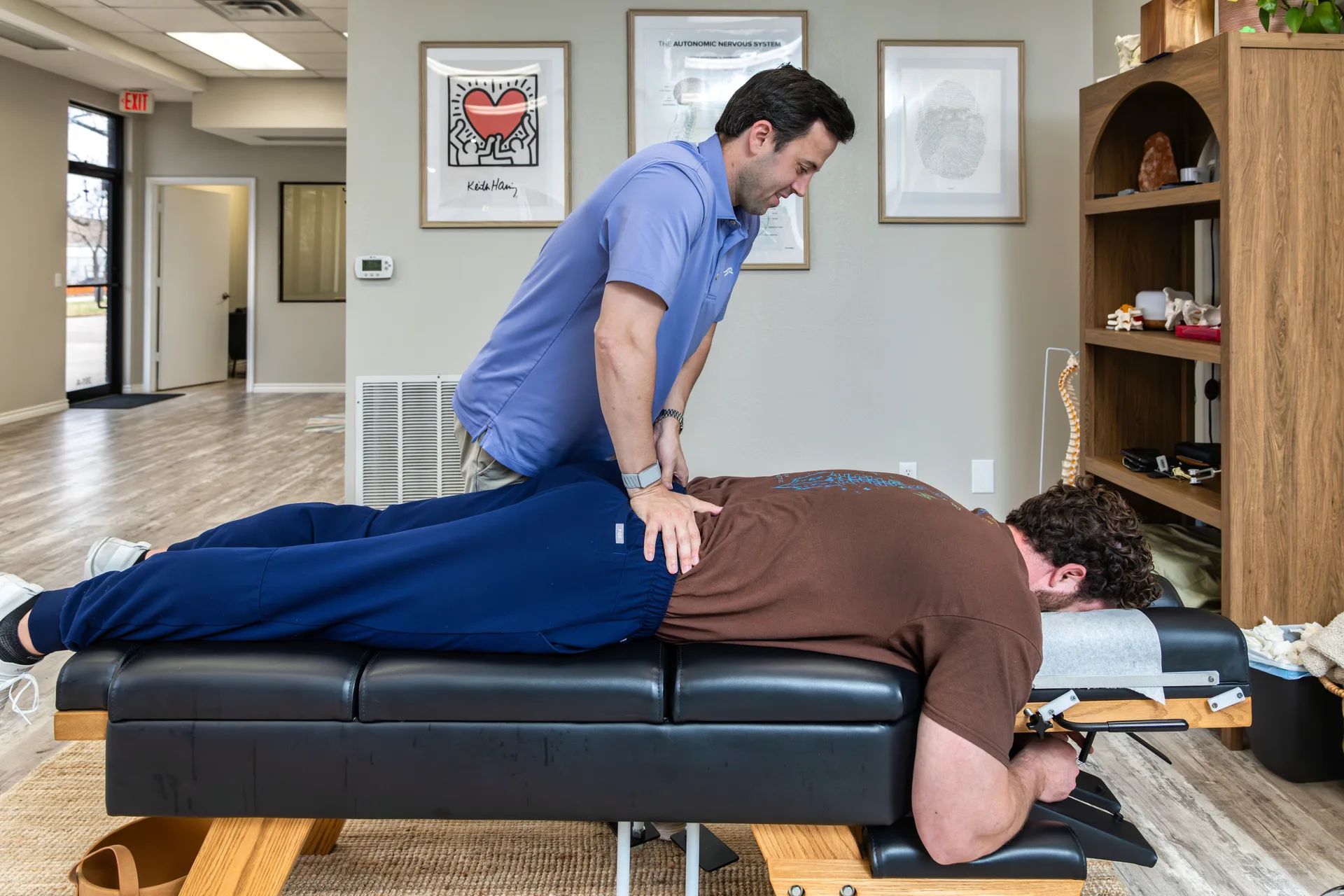
One of the things that sets our office apart is that we don’t guess about your health. We test it. Our INSiGHT scanning technology gives us an objective, measurable picture of how your nervous system is functioning — before, during, and throughout your care.
What is INSiGHT Technology?
INSiGHT stands for Insight Subluxation Station. It’s a suite of three non-invasive, painless scanning technologies developed by the CLA (Chiropractic Leadership Alliance) and certified by NASA for its space program. That’s right — the same technology used to monitor the nervous systems of astronauts is what we use in our Allen, TX office.
The scans take about 10-15 minutes and require no preparation. You sit or stand comfortably while we place sensors along your spine. There is no radiation, no needles, no discomfort. The scans are safe for everyone — including pregnant women, newborns, and children of all ages.
The Three Scans
1. Surface EMG (sEMG)
What it measures: The amount of electrical activity in the muscles along your spine.
Why it matters: Your brain communicates with your muscles through your nervous system. When there’s interference (subluxation), the muscles on one side of the spine may be working harder than the other, or certain areas may be in chronic tension. The sEMG scan shows us this pattern in a color-coded graph.
What we look for: Symmetry and balance. In a healthy spine, the muscle activity on the left and right sides should be relatively equal. Significant asymmetry tells us where the nervous system is being overloaded and where subluxations are likely present.
2. Thermal Scan
What it measures: Temperature differences along the spine.
Why it matters: The autonomic nervous system (the part that controls things you don’t consciously think about — blood flow, organ function, immune response) regulates blood vessel dilation and constriction. When there’s nerve interference, blood flow patterns change, creating measurable temperature differences from one side of the spine to the other.
What we look for: Temperature asymmetry. A healthy spine shows minimal temperature variation between the left and right sides. Significant differences point to areas where the autonomic nervous system is under stress, which can affect organ function, immune health, and overall regulation.
3. Heart Rate Variability (HRV)
What it measures: The variation in time between consecutive heartbeats.
Why it matters: This might sound counterintuitive, but a healthy heart does NOT beat like a metronome. There should be natural variation between beats. Higher heart rate variability indicates a nervous system that is adaptable and resilient — it can shift between “gas pedal” (sympathetic) and “brake pedal” (parasympathetic) smoothly.
Low HRV tells us the nervous system is stuck — usually in sympathetic overdrive (chronic stress). This is associated with fatigue, poor recovery, emotional reactivity, digestive issues, and weakened immune function.
What we look for: Your overall HRV score and the balance between sympathetic and parasympathetic activity. This scan gives us the “big picture” of how your nervous system is handling life’s demands.
Why These Scans Matter
Most people come to a chiropractor because something hurts. But pain is a poor indicator of health — it’s usually the last symptom to appear and the first to disappear, even when the underlying problem remains.
The INSiGHT scans show us what’s happening beneath the surface. We’ve had patients come in with no pain at all whose scans revealed significant nervous system stress. We’ve also had patients in severe pain whose scans showed a surprisingly resilient nervous system. Without objective data, we’d be guessing — and guessing isn’t good enough for your health.
These scans also serve as benchmarks. We re-scan at regular intervals throughout your care so we can track your progress objectively. You get to see your nervous system improving over time, not just feel it. For many patients, seeing the scan results change is one of the most motivating parts of their care.
What the Results Look Like
After your scans, we’ll walk you through the results together. The software generates easy-to-read visual reports with color-coded graphs:
- Green indicates areas functioning within normal ranges
- Blue indicates areas of moderate stress or imbalance
- Red indicates areas of significant stress that need attention
We also generate a CORESCORE — a single number from 0 to 100 that represents your overall nervous system function. This gives you a simple benchmark to track as your care progresses.
Who Should Get Scanned?
Everyone. The scans are appropriate for:
- Newborns and infants — Especially after birth interventions (C-section, vacuum, forceps). Scans help us identify nervous system stress that may contribute to colic, reflux, or nursing difficulties.
- Children and teens — To check for developmental interference, screen for the Perfect Storm pattern, and monitor the effects of screen time on posture and nervous system function.
- Pregnant women — To assess how pregnancy is affecting the nervous system and to guide Webster Technique care.
- Adults — Whether you’re dealing with chronic pain, stress, fatigue, or just want to optimize your health.
See for Yourself
The INSiGHT scans are included in every new patient exam at Trinity Life Chiropractic. They’re part of our $150 New Patient Special, along with a comprehensive consultation, physical examination, and your first adjustment.
If you’ve never had your nervous system objectively measured, this is your chance. The data doesn’t lie — and it often reveals things that change the way you think about your health.
Ready to learn more?
If this article resonated with you, we'd love to help you explore how neurologically based care can help your family thrive.
Book a ConsultationRelated Articles
Understanding the 'Perfect Storm' in Childhood Development
ADHD, sensory processing issues, and anxiety often have a common neurological root. We call this the 'Perfect Storm,' and understanding it is the first step toward hope and healing.
Read article →
Chiropractic Care During Pregnancy: What to Expect
Wondering if chiropractic is safe during pregnancy? Here's what prenatal chiropractic care looks like, when to start, and how it helps with back pain, baby positioning, and preparing for labor.
Read article →