Wellness
When Should You See a Chiropractor? 9 Signs It's Time

Something hurts — or keeps coming back — and you're not sure it's chiropractor-worthy. Here are 9 signs it's time, plus the red flags that mean you should see a physician first.
Almost every week, someone sits across from me at their report of findings and says some version of the same sentence: "I should have come in months ago." Not because their problem was dramatic — because they spent those months wondering whether it was bad enough to do anything about. This post is for the version of you that's still wondering.
Figuring out when to see a chiropractor is genuinely confusing, because most of the things chiropractic helps with are things you can live with. A back that complains every Monday. Headaches you've labeled "normal." Stiffness you blame on age. None of it feels urgent, so the months roll by. After caring for 500+ families here in Allen, TX, I can tell you how that story usually goes: the issue that gets ignored doesn't disappear — it settles in. So here are the nine clearest signs you need a chiropractor, and — because honesty matters more than bookings — the situations where a chiropractor should not be your first stop.
9 Signs It's Time to See a Chiropractor
You don't need all nine. Most people who walk through our doors have two or three. If any of these sound like your last few months, it's worth getting checked.
1. Pain That Keeps Coming Back After Rest and Medication
Rest and over-the-counter pain relievers are reasonable first moves — I'd try them too. But they're aimed at symptoms, so it's worth finding out what's producing them. If your back or neck feels better after a weekend off and flares up again by Wednesday, something is still driving it. A pattern that repeats is your body telling you the problem is structural or neurological, not situational. Recurring pain isn't nagging. It's data.
2. Frequent Headaches or Migraines
If you're reaching for headache medicine multiple times a week, your neck deserves a serious look. Cervicogenic headaches — headaches that originate from dysfunction in the upper neck — are a recognized headache category, and tension-type headaches often trace back to the same region. Research suggests chiropractic care may help reduce the frequency of neck-driven headaches. We see this constantly with headaches and migraines: people who assumed headaches were just part of their personality discover their neck was driving them the whole time.
3. Stiffness or a Shrinking Range of Motion
You turn your whole torso to check a blind spot. You warm up your neck before backing out of the driveway. Putting on socks has become a strategy. Stiffness creeps in so gradually that most people don't realize how much motion they've surrendered until an exam actually measures it. Joints are designed to move, and joints that stop moving well tend to recruit their neighbors into the same restricted pattern. The earlier we restore motion, the less your body has to compensate around the problem.
4. Pain, Numbness, or Tingling That Radiates
Pain that travels is different from pain that stays put. A deep ache running from your low back down the back of your leg, tingling into your foot, burning from your neck into your shoulder blade — radiating symptoms usually point to an irritated nerve, and sciatica is the classic example. Nerve irritation rarely resolves by being ignored, because the pressure or tension on that nerve doesn't care how patient you are. One caveat: numbness in the groin or rapidly progressing weakness belongs in the red-flag section below — please read it.
5. You Sit All Day and Your Posture Is Paying for It
Desk from eight to five, commute down US-75, couch and a phone after the kids are in bed. Your spine adapts to whatever you do most, and for most adults around Allen, that's sitting. Forward head posture, rounded shoulders, tight hip flexors, a low back that aches by 3 p.m. — none of it is mysterious. It's adaptation. If your reflection is starting to look like your desk chair, an evaluation now beats a chronic problem later. A standing desk helps. It doesn't undo the pattern.
6. You Were in a Car Accident or Took a Fall — Even a "Minor" One
Adrenaline is an excellent painkiller, which is exactly why people walk away from a fender-bender feeling fine and wake up wrecked ten days later. Whiplash symptoms often take days or even weeks to appear, and a low-speed collision still whips your head with surprising force. Falls work the same way — off a ladder, on a wet floor, over a toddler's toy. If anything feels severe, get medically evaluated first. Once serious injury is ruled out, a chiropractic exam can catch the tension patterns an accident leaves behind before they settle in as chronic pain.
7. Pregnancy Discomfort That's Stealing Your Sleep
Low back pain, pelvic pressure, hip pain that makes every sleeping position wrong — all common in pregnancy, but common isn't the same as "nothing can be done." Pregnancy chiropractic care at our office uses the Webster Technique — I'm certified in it — with side-lying positioning and pregnancy pillows, and no pressure on your belly at any point. Many moms tell us the discomfort they'd accepted as the price of pregnancy improved more than they expected. And we work alongside your OB or midwife throughout, not around them.
8. Your Child Is Struggling With Sleep, Feeding, or Development
This one surprises parents, but it's half of what we do. Birth is physically demanding for a baby, and interventions like vacuum assistance or C-section can add tension to a tiny nervous system. That tension may show up as difficulty latching, constant arching and fussiness, poor sleep, or ongoing developmental struggles. To be clear about what pediatric chiropractic actually is: for infants, we use sustained fingertip pressure — about the same pressure you'd use to test a ripe tomato. No twisting, no popping, no cracking, ever. We're not treating a diagnosis; we're addressing nervous system tension that may be contributing, and we work alongside your pediatrician, never instead of them.
9. Nothing Hurts — But You Want Objective Data
Some of our most consistent practice members came in without a single symptom. They're carrying demanding jobs, young kids, and real stress, and they want to know how their body is actually holding up — not just how it feels. That's what INSiGHT scans are for: three measurements — a thermal scan, surface EMG, and heart rate variability (HRV) — that show how your nervous system is adapting to stress. When your system is stuck with the "gas pedal" down, the scans show it long before symptoms do. You don't wait for the check-engine light to maintain your car. Same principle.
When a Chiropractor Should NOT Be Your First Call
I'd rather lose a booking than miss a red flag, so let's be direct. Go to a physician or the emergency room first if you have:
- Back pain with a fever or unexplained weight loss — that combination needs medical evaluation promptly
- Significant trauma with severe symptoms — a crash or fall where you can't bear weight, something looks deformed, or the pain is extreme; rule out fracture first
- Numbness in your groin or inner thighs, loss of bladder or bowel control, or rapidly progressing leg weakness — these can signal cauda equina syndrome, a rare surgical emergency. Go to the ER now, not next week.
- A sudden, severe "worst headache of your life," or a headache with confusion, fever, or vision changes — emergency care, immediately
If you show up at our office with any of these, my job is to get you to the right provider fast — and we will. Chiropractic works alongside medicine, not instead of it. A good chiropractor's first skill is knowing who doesn't belong on the table yet.
What to Expect at Your First Visit
If the signs above sound like you, here's exactly what starting looks like at Trinity Life — no mystery, no commitment required.
Our $150 New Patient Special (regular price $350) includes:
- A comprehensive consultation — your history, your symptoms, your goals, unrushed
- A physical examination — orthopedic and neurological testing specific to your concerns
- INSiGHT nervous system scans — the thermal, surface EMG, and HRV measurements described above
- A report of findings — we sit down and explain what we found in plain English
Then you decide. There's no high-pressure pitch at the end, and nobody chases you to the parking lot with a care plan. If we can help, we'll show you exactly how and what it costs. If we're not the right fit, we'll tell you that too and point you toward someone who is. I've walked through the whole appointment step by step in what to expect at your first chiropractor visit if you want the full picture before you book.
Once You've Started, the Next Question Is "How Often?"
Deciding to go is question one. Question two — how often you should actually be seen — depends on what your exam and scans show, how long the problem has been building, and what you want out of care. There's no honest one-size-fits-all answer, which is why I wrote a separate breakdown of how often you should see a chiropractor covering the three phases of care and what drives the schedule. Short version: more frequent at first if correction is needed, then progressively less as your body learns to hold.
The Simplest Way to Know for Sure
You've read the signs. You could keep researching — or you could spend one visit getting examined and scanned, and actually know. That's the whole point of how we've structured the first appointment: real measurements, straight answers, zero pressure. It's why families across Allen and the surrounding cities have left us 220+ five-star Google reviews. If your issue has been on your mind long enough to read this far, it's been on your mind long enough.
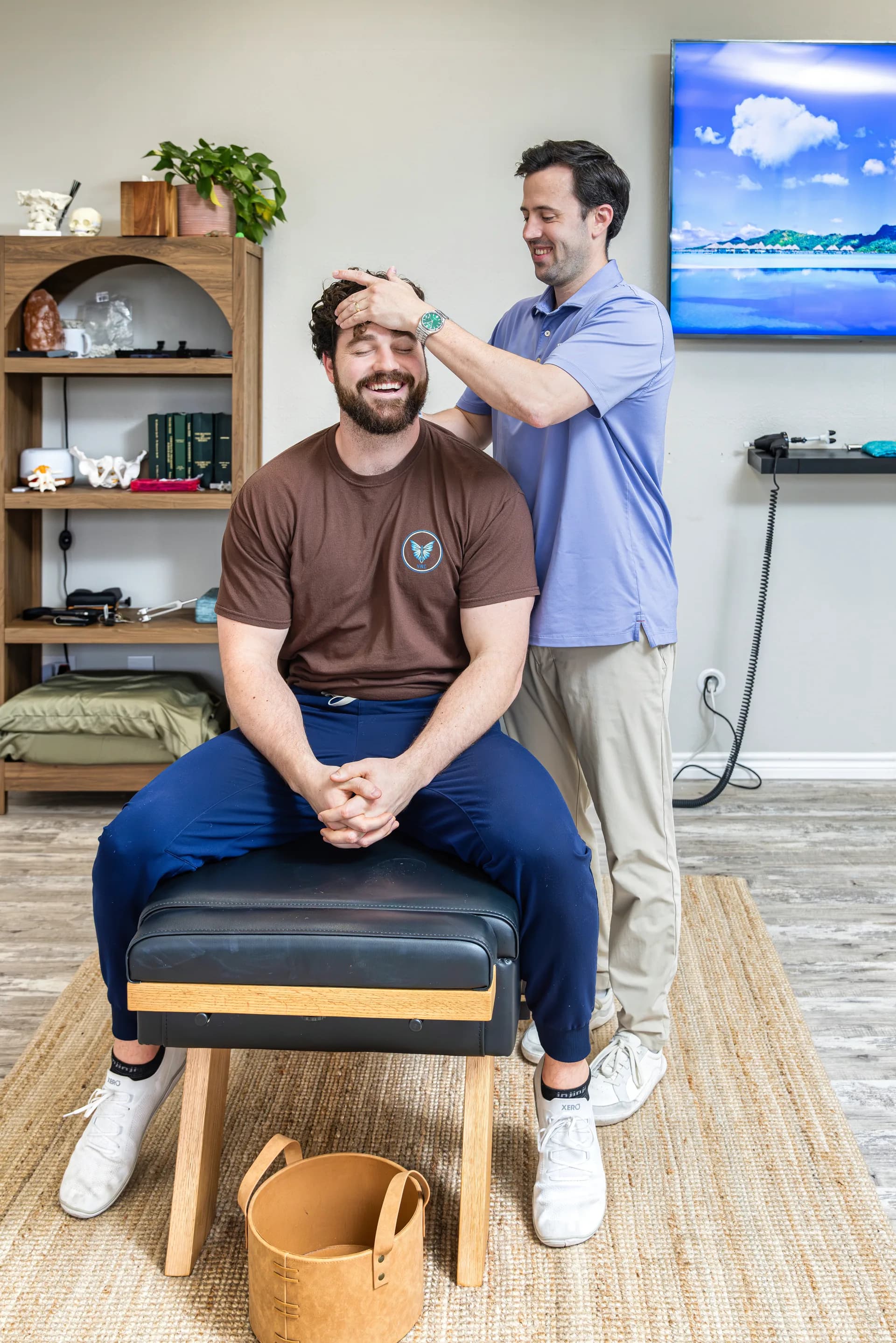
About the author
Dr. Colton O'Brien
Founder of Trinity Life Chiropractic — a family practice in Allen, TX. Parker University DC, Webster Technique certified, INSiGHT pediatric-trained.
Frequently asked questions
How do I know if I need a chiropractor?
The clearest signs are pain that keeps returning after rest or medication, frequent headaches, stiffness that limits how you move, and pain that radiates down an arm or leg. Big life events count too — a car accident, pregnancy, or a baby struggling with sleep or feeding. If you're unsure, an exam with objective nervous system scans gives you a real answer instead of a guess.
Can a chiropractor help if I'm not in pain?
Yes. Pain is a late indicator — nervous system stress often builds for months or years before anything hurts. Many of our practice members come in for prevention and performance, not pain. INSiGHT scans measure how your body is adapting to stress, so we can address tension patterns before they turn into symptoms.
Should I see a doctor or a chiropractor first?
For red flags — fever with back pain, trauma with severe symptoms, numbness in the groin, or loss of bladder or bowel control — see a physician or ER first. For nagging musculoskeletal issues like recurring back pain, stiffness, or tension headaches, a chiropractor is a reasonable starting point. We work alongside your medical providers and refer out whenever needed.
What happens at a first chiropractic visit?
At Trinity Life, your first visit includes a comprehensive consultation, a physical exam, and INSiGHT nervous system scans — thermal, surface EMG, and heart rate variability. Then we sit down for a report of findings and explain exactly what we found. There's no high-pressure pitch. You get answers first and decide from there.
How much does it cost to see a chiropractor?
Nationally, initial visits run $150 to $400 and follow-up adjustments $50 to $150. At Trinity Life Chiropractic in Allen, TX, our New Patient Special is $150 — regularly $350 — and includes the consultation, exam, INSiGHT scans, and report of findings, so you know exactly what's going on before committing to anything.
Keep reading
More from our practice.

How to Find a Family Chiropractor in Allen, TX
New to Allen? Here's how to find a family chiropractor who fits your whole household — what to look for, what to ask, and how to book.

Chiropractic for Colic: A Gentle Approach to Fussy Babies
Chiropractic for colic uses gentle, sustained-contact adjustments that may calm a fussy baby's nervous system. Here's how the approach works.

Postpartum Chiropractic Care: The Fourth Trimester
Postpartum chiropractic care can help new moms recover in the fourth trimester with gentle, Webster-certified support for the pelvis, spine, and posture.
Our services
How we can help.
ADHD & Sensory Care
Quieting the Storm Inside
Back Pain Relief
Drug-Free Back Pain Treatment in Allen, TX
Colic & Reflux Relief
Soothing the Unsettled Baby
Ear Infections & Immunity
Gentle Support Alongside Your Pediatrician
Family Chiropractic
Wellness for the Whole Household
Kids & Teens
Navigating Growth Spurts and School Stress
Conditions we treat
Common concerns families bring us.
Chronic Neck Pain
Neck pain that lingers for weeks or months is rarely just muscle tightness. It's usually a sign of spinal misalignment creating nerve interference, chronic muscle tension, and progressive degeneration that often won't settle on its own.
Constipation (Infant & Child)
Constipation in babies and children is often linked to nervous system interference affecting gut motility and digestive function. Gentle chiropractic adjustments aim to support nerve communication to the digestive system, a drug-free option alongside your pediatrician's advice.
Growing Pains
Growing pains are common in children, but they're often dismissed as normal when they may indicate spinal tension, muscular imbalance, or nervous system stress that responds well to gentle chiropractic care.
Headaches & Migraines
Recurring headaches, especially ones that start in the neck, are often linked to tension in the upper cervical spine. Chiropractic care looks at how your neck and nervous system are working, alongside any medication your doctor recommends.
Poor Sleep & Insomnia
Poor sleep affects everything — mood, focus, immune function, and healing. When the nervous system is stuck in a stressed state, the body physically cannot wind down for restful sleep, no matter how many supplements or sleep hygiene tips you try.
Postpartum Back Pain
Postpartum back pain affects the majority of new mothers as the body recovers from pregnancy, labor, and the physical demands of caring for a newborn. The structural shifts from pregnancy don't always self-correct — chiropractic care can support recovery and pelvic balance.
From the article to the table
See what your nervous system is actually doing — $150 first visit.
228 five-star Google reviews