Postpartum Chiropractic Care: The Fourth Trimester

Postpartum chiropractic care can help new moms recover in the fourth trimester with gentle, Webster-certified support for the pelvis, spine, and posture.
Postpartum chiropractic care is gentle, targeted care that helps your body recover after birth, and the short answer is yes, it can make a real difference in how you feel through those first raw months. After delivery your pelvis, spine, and nervous system are still adjusting from nine months of change, and many new moms notice more comfort, better posture, and easier movement once that foundation is supported again. It won't erase every ache overnight, but it's one of the calmer, drug-free ways to feel more like yourself while you care for a newborn.
What Postpartum Chiropractic Care Actually Is
Postpartum chiropractic care focuses on the physical recovery that happens after your baby arrives. During pregnancy, the hormone relaxin loosens the ligaments around your pelvis so your body can make room for birth. That flexibility is wonderful for delivery, but it also means your pelvis and lower back can stay a little unstable for weeks afterward. Add in round-the-clock feeding, carrying, and rocking, and it's easy to see why so many moms feel worn out by the end of the fourth trimester. Gentle adjustments help bring the pelvis and spine back into balance so your body can settle and heal.
The Fourth Trimester and Why It's So Demanding
The "fourth trimester" is the roughly twelve weeks after birth, when you and your baby are both adjusting to life on the outside. Your hormones are shifting, your sleep is broken, and your body is doing heavy physical work it's never done quite this way before. Nursing pulls your shoulders forward. Car-seat carriers tug on one side. You hunch over a changing table a dozen times a day. All of it adds up to real strain on your neck, upper back, and lower back.
None of that means anything is wrong with you. It means your body is under a new kind of load, and small misalignments can build quietly until they start to ache. That's the window where steady, supportive care tends to help the most.
Signs Your Body Could Use Some Support
You don't need to be in serious pain to benefit from care. A lot of moms brush off these everyday signals as just part of having a newborn:
- Nagging lower-back or hip ache that flares when you stand or lift.
- Neck and shoulder tightness by the end of a feeding-heavy day.
- A pelvis that feels off, unstable, or uneven when you walk.
- Headaches or tension that seem to ride along with the exhaustion.
If a few of those sound familiar, your body is simply asking for a little help catching up, and that's exactly what postpartum chiropractic care is designed to do.
How Postpartum Chiropractic Care May Help New Moms
Every mom's recovery looks a little different, but here's what many families notice with consistent care:
- More comfort in the lower back and hips as the pelvis re-stabilizes after birth.
- Relief from the neck and upper-back tension that comes with feeding and carrying a newborn.
- Better posture, which can make nursing and long holding sessions easier on your body.
- Calmer nervous-system function, which many moms say helps them feel less frazzled and more rested.
If low-back or pelvic pain has stuck around longer than you expected, our approach to postpartum back pain looks at the whole picture, not just the spot that hurts.
What a Postpartum Visit Looks Like
Care at Trinity Life Chiropractic starts with understanding your body, not rushing to adjust it. Dr. Colton O'Brien is Webster-certified and neurologically focused, which means your first visit (about 45 minutes) includes a real conversation about your pregnancy, your delivery, and how you're feeling now. We use INSiGHT nervous-system scans to see where your body is holding stress, so your care is based on what's actually going on rather than guesswork.
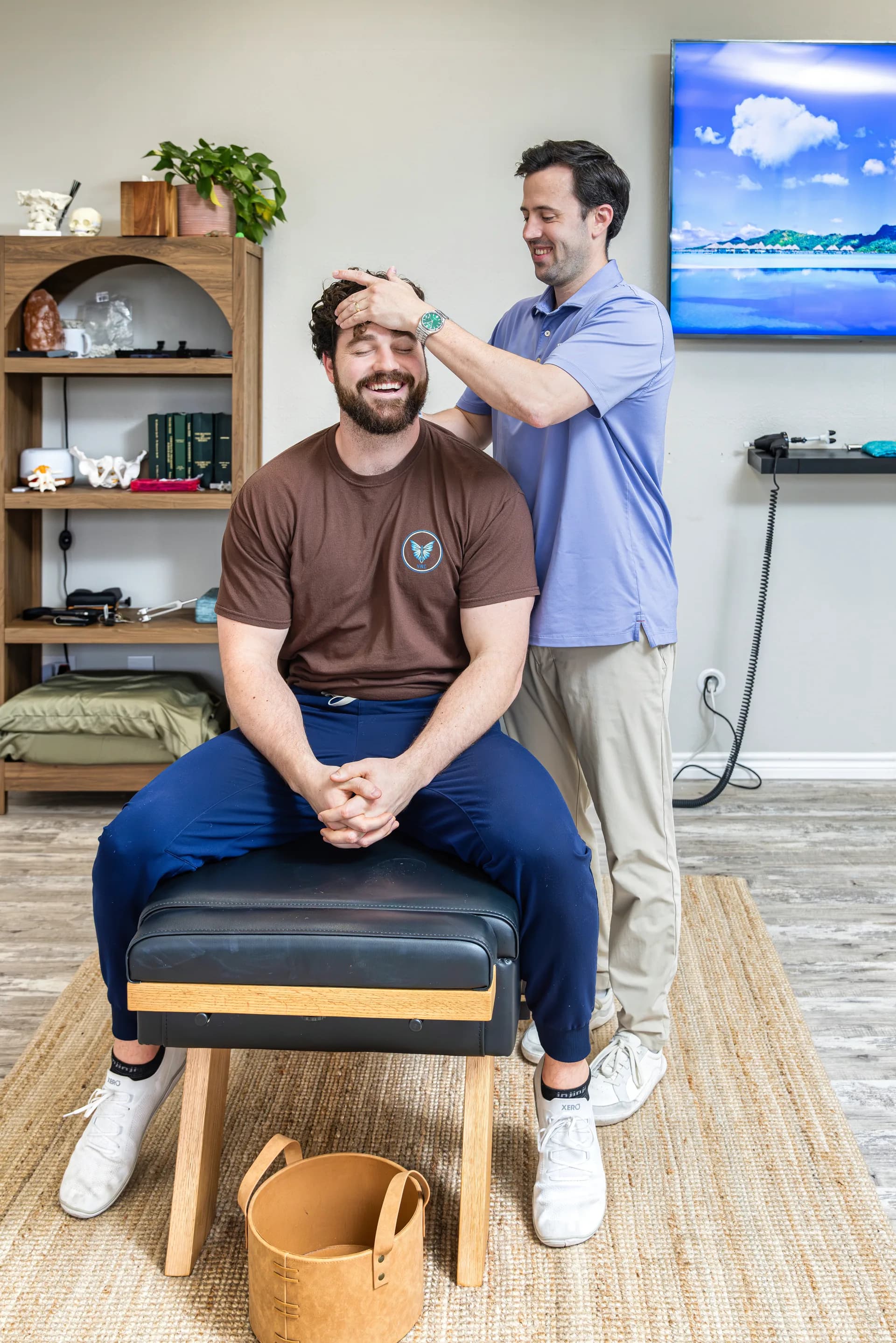
The adjustments themselves are gentle. For postpartum moms, Dr. O'Brien often uses low-force techniques like the Thompson drop-table method and sustained, gentle contact rather than any forceful twisting. It should feel supportive, not intimidating, and many moms are surprised by how relaxed they feel afterward.
Is Postpartum Chiropractic Care Safe?
For most new moms, gentle chiropractic care is a safe, drug-free option, and it works best as a complement to the care your OB, midwife, or pediatrician provides, never a replacement for it. If you had a cesarean birth, a complicated delivery, or any ongoing medical concern, tell us and keep your medical team in the loop. Good postpartum care is a team effort, and we're glad to be one part of yours.
You can learn more about our postpartum chiropractic care and how we tailor each plan to where you are in recovery.
When Should You Start?
There's no single right day. Some moms come in within the first couple of weeks; others wait until things settle at home. Generally, sooner is easier, because addressing strain early tends to keep it from building into something bigger. If you're cleared for normal activity and you're feeling the aches of new-mom life, it's a reasonable time to get checked.
A Gentle Next Step
You're pouring everything into your baby right now, and it's okay to spend a little of that care on yourself, too. If you're ready to feel more comfortable and more like you, our $150 new-patient visit is an easy place to start, or you can call us at (214) 509-7744. We'd love to help you move through the fourth trimester feeling supported.
About the author
Dr. Colton O'Brien
Founder of Trinity Life Chiropractic — a family practice in Allen, TX. Parker University DC, Webster Technique certified, INSiGHT pediatric-trained.
Frequently asked questions
When can I start postpartum chiropractic care after birth?
Many moms begin within the first few weeks, once they're feeling up to it. If you had a complicated or cesarean delivery, check with your OB or midwife first, then come in whenever you're ready. Starting sooner often makes recovery more comfortable.
Is chiropractic care safe while I'm breastfeeding?
Yes. Gentle adjustments don't involve medication and won't affect your milk, so nursing moms can receive care as usual. Many find it actually helps with the neck and shoulder tension that comes from long feeding sessions.
Can it help with back pain that won't go away?
It may. Lingering postpartum back pain often traces back to a pelvis that's still re-stabilizing after birth. Gentle care helps bring that foundation back into balance so your body can heal, though results vary from mom to mom.
What techniques do you use for new moms?
Dr. O'Brien favors gentle, low-force methods like the Thompson drop-table technique and sustained-contact adjustments. There's no forceful twisting, and your care is guided by INSiGHT nervous-system scans.
How many visits will I need?
That depends on your body and your recovery. After your first visit and scan, Dr. O'Brien will walk through a plan that fits your goals. Some moms feel better quickly; others prefer steady care through the whole fourth trimester.
Do I need a referral from my OB?
No referral is required. That said, we always encourage you to keep your OB, midwife, and pediatrician in the loop, since the best postpartum recovery is a team effort.
Keep reading
More from our practice.

Chiropractic to Prepare for Labor: How Care Helps
Curious about using chiropractic to prepare for labor? Here's how gentle, Webster-certified prenatal care supports a balanced pelvis before birth.

What an INSiGHT Nervous System Scan Reveals
An INSiGHT nervous system scan measures how well your nervous system works, not just where it hurts. Here's what the three scans read and what they mean.

How a Family Chiropractic Care Plan Works
A family chiropractic care plan coordinates gentle, age-appropriate care for everyone in your household under one roof. Here's how it works.
Our services
How we can help.
ADHD & Sensory Care
Quieting the Storm Inside
Back Pain Relief
Drug-Free Back Pain Treatment in Allen, TX
Colic & Reflux Relief
Soothing the Unsettled Baby
Ear Infections & Immunity
Breaking the Antibiotic Cycle
Family Chiropractic
Wellness for the Whole Household
Kids & Teens
Navigating Growth Spurts and School Stress
Conditions we treat
Common concerns families bring us.
Chronic Neck Pain
Neck pain that lingers for weeks or months is rarely just muscle tightness. It's usually a sign of spinal misalignment creating nerve interference, chronic muscle tension, and progressive degeneration that won't resolve on its own.
Constipation (Infant & Child)
Constipation in babies and children is often linked to nervous system interference affecting gut motility and digestive function. Gentle chiropractic adjustments help restore proper nerve communication to the digestive system, offering relief without medication.
Growing Pains
Growing pains are common in children, but they're often dismissed as normal when they may indicate spinal tension, muscular imbalance, or nervous system stress that responds well to gentle chiropractic care.
Headaches & Migraines
Recurring headaches and migraines are often caused by tension and misalignment in the upper cervical spine, which interferes with blood flow and nerve function. Chiropractic care addresses the structural root cause rather than masking the pain with medication.
Poor Sleep & Insomnia
Poor sleep affects everything — mood, focus, immune function, and healing. When the nervous system is stuck in a stressed state, the body physically cannot wind down for restful sleep, no matter how many supplements or sleep hygiene tips you try.
Postpartum Back Pain
Postpartum back pain affects the majority of new mothers as the body recovers from pregnancy, labor, and the physical demands of caring for a newborn. The structural shifts from pregnancy don't always self-correct — chiropractic care speeds recovery and restores pelvic balance.
From the article to the table
See what your nervous system is actually doing — $150 first visit.
228 five-star Google reviews