Chiropractic
Cervical Spine Adjustment: What to Expect (and What It Feels Like)

Thinking about a neck adjustment but nervous about the crack? Here's exactly what a cervical spine adjustment involves at our Allen, TX office — including the gentle, no-popping options.
Every week someone sits down in my office, tells me their neck has been bothering them for months, and then adds the same nervous disclaimer: they don't love the idea of anyone cracking their neck. I get it. Your neck feels vulnerable in a way your lower back doesn't. So let me walk you through exactly what a cervical spine adjustment is, what it feels like, and — because it's the real question behind the question — whether it's safe.
If you've been searching for a neck adjustment chiropractor with one hand on a heating pad, you're my typical new patient: you want relief, you've heard adjustments help, and the "crack" makes you hesitate. Fair. This post covers your neck's anatomy in plain English, what actually happens during a cervical adjustment at our Allen, TX office, what that popping sound really is, and the honest safety conversation — including the gentle options that involve no popping at all.
Your Neck in Plain English: Seven Small Bones, One Big Job
The cervical spine is the top section of your spine — seven vertebrae, labeled C1 through C7, running from the base of your skull to the top of your shoulders. The top two are specialists: C1 (the atlas) holds up your skull, and C2 (the axis) provides most of your head rotation.
Two facts explain why necks cause so much trouble:
- It's the most mobile section of your spine. Your neck lets you nod, rotate, and tilt through a huge range of motion. That mobility is a tradeoff — more freedom of movement means more opportunity for joints to get irritated or stuck.
- It carries a surprising load. Your adult head weighs about 10 to 12 pounds — roughly a bowling ball balanced on seven small bones, all day, every day.
And that's with good posture. Tilt your head forward to look at a phone and the effective load multiplies. One widely cited biomechanics study estimated that at a 60-degree forward tilt — a normal texting angle — the force on the cervical spine reaches roughly 60 pounds. Hold that position for a few hours a day and you understand why "tech neck" walks into my office constantly.
There's a neurological layer too. The upper neck sits right below the brainstem, and the nerves that serve your arms, hands, and much of the brain-body communication pathway pass through this region. When these joints stop moving well, the effects often aren't limited to local pain.
What Causes Cervical Spine Dysfunction?
Almost nobody wakes up with a neck problem that came from nowhere. The patterns I see most:
- Desk work. Eight hours aimed at a monitor pulls the head forward and rounds the shoulders. Your muscles adapt to the position you hold most.
- Phones and tablets. The forward-tilt math above, repeated hundreds of times a day.
- Sleep position. Stomach sleeping cranks your neck into full rotation for hours at a time. A pillow that's too high or too flat does slow, quiet damage too.
- Old whiplash. A rear-end collision from years ago — even one that felt minor at the time — can leave joint restriction and muscle guarding that never fully resolved.
- Stress. Most of us carry tension in the upper traps and neck. When your stress physiology stays switched on, those muscles stay braced.
These small dysfunctions compound. A joint stops moving well, muscles tighten around it, posture adapts, and one day checking your blind spot hurts. If your neck has bothered you for more than a few weeks, that's not a bad day anymore — it's a pattern, and it's the same story we hear from most patients dealing with chronic neck pain.
What a Cervical Spine Adjustment Involves at Trinity Life
Here's the part that surprises people: at our office, nobody adjusts your neck before we understand it.
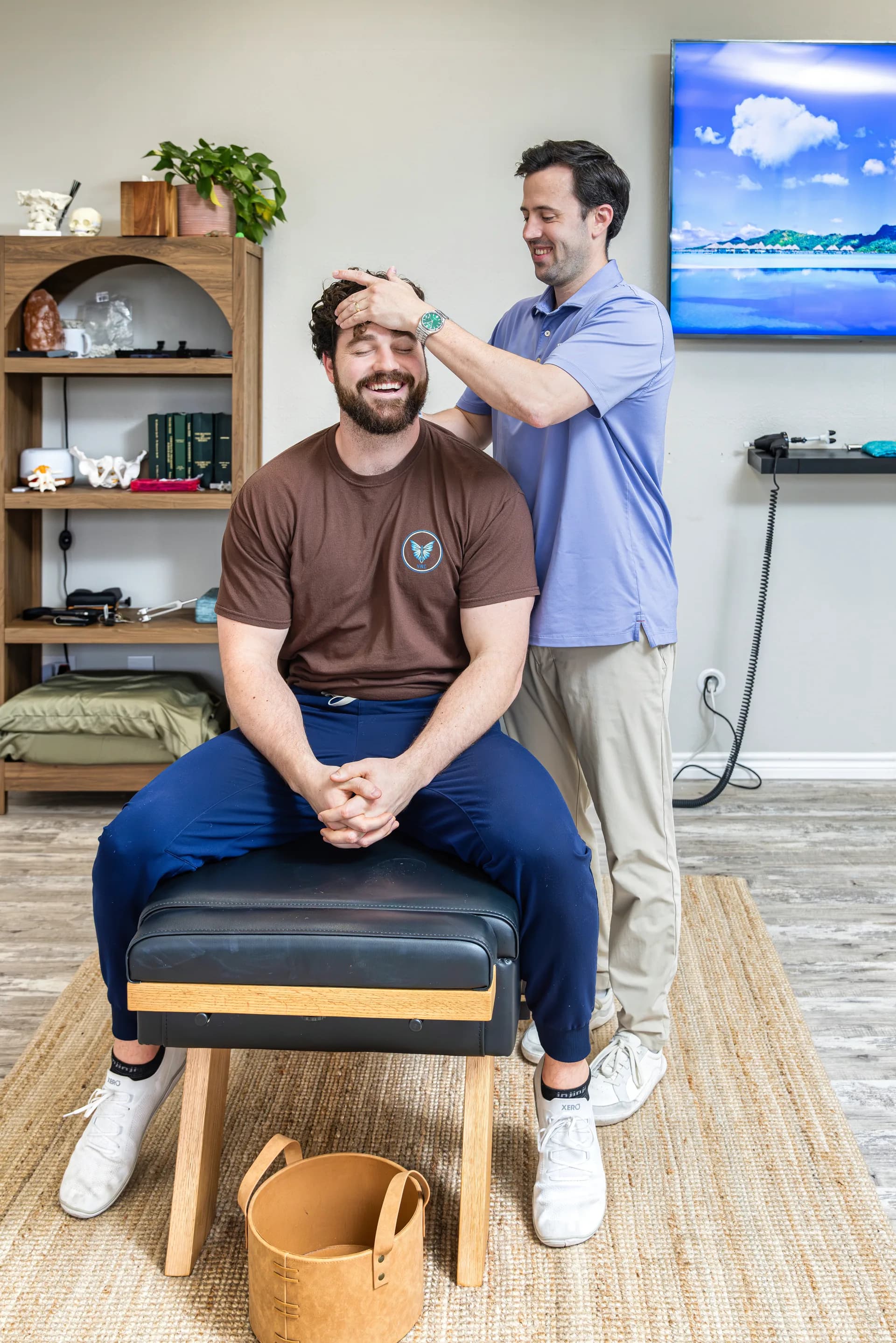
Assessment comes first. Your initial visit includes a real consultation about your history — the desk job, the old fender-bender, the headaches — plus a physical examination and INSiGHT nervous system scans: a thermal scan, surface EMG, and heart rate variability testing. Those scans give us objective data about how your nervous system is functioning, so recommendations come from measurement, not guessing. Then we sit down and explain what we found before any care begins. That's the standard process for every new patient here.
Then the adjustment — with options. A cervical adjustment is a specific, controlled input to a joint that isn't moving well. At Trinity Life, that can look like:
- Instrument-assisted adjusting. A small handheld tool (Activator-style) delivers a quick, precise, low-force impulse. No twisting, no turning your head, usually no sound at all.
- Light-force manual adjusting. A gentle, specific contact with a quick, shallow movement — far more controlled than the wrenching people picture.
- Drop-table assisted work. A Thompson drop-table lets the table's dropping section do part of the work, so less force goes through you.
I wrote a full breakdown of the adjustment methods we use if you want detail on each one. The short version that matters for this post: you are never forced into a technique you're uncomfortable with. If you'd rather skip manual neck work entirely, say so — I'll build your care plan around instrument adjusting instead. Plenty of our patients choose that route and do very well.
What Does a Cervical Spine Adjustment Feel Like?
Honest answer: quicker and less dramatic than you're imagining.
A manual cervical adjustment takes a few seconds. You'll feel my hands find a specific contact point, a moment of gentle positioning, then a quick, light impulse. Most patients describe brief pressure, possibly a pop, and then — very commonly — an immediate feeling of lightness or easier movement. Instrument adjusting feels like a series of quick taps. Drop-table work feels like a small, cushioned drop beneath you.
About That Popping Sound
The pop is the thing everyone fears, so here's what it actually is: gas releasing inside the joint — not bone cracking.
Your joints are lubricated by synovial fluid, which has gases dissolved in it. When a joint is stretched quickly, pressure inside the joint capsule drops, dissolved gas comes out of solution, and a small bubble forms. That pressure change makes the sound. It's the same harmless mechanism as cracking your knuckles. Nothing grinds, snaps, or breaks — and a good adjustment doesn't require a pop at all. The joint moving better is the goal. The sound is a side effect.
Is a Neck Adjustment Safe? The Honest Conversation
This is the real question, so I won't dance around it. Most people who hesitate about cervical adjustments have read a frightening headline, and they deserve a straight answer instead of a sales pitch.
Serious adverse events associated with neck adjustments are rare. The overwhelmingly common side effect of a cervical adjustment is mild, temporary soreness. The serious complications you may have read about — the ones involving arteries and strokes — are rare events, and they're precisely why this profession takes screening seriously.
Screening is where safety actually lives. Before I adjust anyone's neck, I want the full history: vascular risk factors, medications, recent trauma, and the character of any headaches. One important detail from the research on this topic: people in the early stages of an artery problem often experience neck pain and headache first, which means they may seek care for those very symptoms. A careful history and examination exist to catch that picture before anyone performs an adjustment. This is why "assessment first" isn't marketing language at our office — it's the safety system.
Low-force options remove most of the fear. If the rotary "crack" is what worries you, remember it isn't required. Instrument-assisted adjusting involves no neck rotation and no popping. You can receive thorough cervical care that never resembles the videos that made you nervous.
And some symptoms need a physician before any chiropractor. I'd rather lose a booking than miss a red flag. Go to a medical provider first — urgently — if you have:
- A sudden, severe headache unlike any you've had before
- Neurological symptoms — numbness or weakness in your face or limbs, slurred speech, vision changes, or new dizziness
- Significant trauma, like a car accident or hard fall that hasn't been medically evaluated
- Fever with a stiff neck
We work alongside physicians, not instead of them. If your exam or scans suggest something outside my lane, I'll tell you and point you to the right provider. I go deeper on that decision in when to see a chiropractor — and when not to.
Aftercare: The First 24 to 48 Hours
After a cervical adjustment — especially your first — here's what's normal and what helps:
- Mild soreness is possible. Joints and muscles that held a pattern for years just received new input. Some patients feel a workout-style soreness for a day or two. It fades.
- Drink water and keep moving. Gentle walking and normal activity help your body integrate the change. Skip the max-effort gym session that same day.
- Don't crack your own neck. Self-manipulation is non-specific — it usually moves the joints that were already moving too much and leaves the stuck ones stuck.
And if anything after a visit ever feels wrong to you — not sore, wrong — call us at (214) 509-7744. That's what we're here for.
When Will You Feel Results?
Some patients feel a difference walking out of their first adjustment. Others — especially those with years of desk posture or an old injury behind their pain — notice change gradually over weeks as joints, muscles, and the nervous system adapt. If your neck tension feeds into headaches or migraines, those often shift on their own timeline as well.
I won't promise you a specific number of visits in a blog post, because that would be guessing. What I will promise: after your exam and scans, you get a specific recommendation with timelines and costs, we re-scan along the way so progress is measured instead of assumed, and you decide how to proceed. No pressure. No prepaid mega-plan pushed on day one.
The Next Step (No Cracking Required)
If neck pain has been running your life — stiff mornings, tension headaches, shoulders that live up by your ears — the worst plan is waiting for it to resolve itself while the pattern digs in deeper.
Our $150 New Patient Special (regularly $350) includes a comprehensive consultation, a physical exam, INSiGHT nervous system scans, and a clear report of findings. You'll know exactly what's going on in your neck and what I'd recommend — including which techniques fit your comfort level — before you commit to anything.
Nervous is normal. Informed is better.
About the author
Dr. Colton O'Brien
Founder of Trinity Life Chiropractic — a family practice in Allen, TX. Parker University DC, Webster Technique certified, INSiGHT pediatric-trained.
Frequently asked questions
Is a neck adjustment safe?
Serious adverse events associated with neck adjustments are rare. The bigger safety factor is screening — a careful history and examination before any adjustment happens. That's standard at our office. If you're uncomfortable with manual adjustments, gentle instrument-assisted techniques work without any twisting or cracking. Red flags like sudden severe headache or numbness should see a physician first.
What does a cervical adjustment feel like?
Most patients feel quick, light pressure and sometimes a painless popping sound — that's gas releasing from the joint fluid, not bone. Many people describe an immediate sense of relief or lighter movement afterward. Mild soreness for a day or two is possible, similar to how muscles feel after a new workout. It should never feel forceful or frightening.
Can a cervical adjustment help with headaches?
Many headaches — especially tension headaches and cervicogenic headaches that start in the neck — are connected to dysfunction in the upper cervical spine. When those joints move better and the surrounding muscles relax, many patients report fewer and less intense headaches. It's one of the most common reasons people see us. We assess first so we know whether your neck is actually the source.
How many sessions does it take for neck pain?
It depends on how long the problem has existed and what the assessment shows. Some people feel noticeable relief within the first few visits. Neck tension that built up over years of desk work usually takes longer to change. After your exam and INSiGHT scans, we give you a specific recommendation with timelines and costs before you commit to anything.
Can I get adjusted without the cracking?
Yes. Instrument-assisted techniques deliver a precise, low-force impulse with no twisting and usually no popping sound. Thompson drop-table work is another gentle option. Plenty of our patients choose these methods and get real results. You will never be pushed into a technique you're uncomfortable with — tell us what you prefer and we'll build your care around it.
Keep reading
More from our practice.

How to Find a Family Chiropractor in Allen, TX
New to Allen? Here's how to find a family chiropractor who fits your whole household — what to look for, what to ask, and how to book.

Chiropractic for Colic: A Gentle Approach to Fussy Babies
Chiropractic for colic uses gentle, sustained-contact adjustments that may calm a fussy baby's nervous system. Here's how the approach works.

Postpartum Chiropractic Care: The Fourth Trimester
Postpartum chiropractic care can help new moms recover in the fourth trimester with gentle, Webster-certified support for the pelvis, spine, and posture.
Our services
How we can help.
ADHD & Sensory Care
Quieting the Storm Inside
Back Pain Relief
Drug-Free Back Pain Treatment in Allen, TX
Colic & Reflux Relief
Soothing the Unsettled Baby
Ear Infections & Immunity
Breaking the Antibiotic Cycle
Family Chiropractic
Wellness for the Whole Household
Kids & Teens
Navigating Growth Spurts and School Stress
Conditions we treat
Common concerns families bring us.
Chronic Neck Pain
Neck pain that lingers for weeks or months is rarely just muscle tightness. It's usually a sign of spinal misalignment creating nerve interference, chronic muscle tension, and progressive degeneration that won't resolve on its own.
Constipation (Infant & Child)
Constipation in babies and children is often linked to nervous system interference affecting gut motility and digestive function. Gentle chiropractic adjustments help restore proper nerve communication to the digestive system, offering relief without medication.
Growing Pains
Growing pains are common in children, but they're often dismissed as normal when they may indicate spinal tension, muscular imbalance, or nervous system stress that responds well to gentle chiropractic care.
Headaches & Migraines
Recurring headaches and migraines are often caused by tension and misalignment in the upper cervical spine, which interferes with blood flow and nerve function. Chiropractic care addresses the structural root cause rather than masking the pain with medication.
Poor Sleep & Insomnia
Poor sleep affects everything — mood, focus, immune function, and healing. When the nervous system is stuck in a stressed state, the body physically cannot wind down for restful sleep, no matter how many supplements or sleep hygiene tips you try.
Postpartum Back Pain
Postpartum back pain affects the majority of new mothers as the body recovers from pregnancy, labor, and the physical demands of caring for a newborn. The structural shifts from pregnancy don't always self-correct — chiropractic care speeds recovery and restores pelvic balance.
From the article to the table
See what your nervous system is actually doing — $150 first visit.
228 five-star Google reviews